New Network Silicon, Enabled for AI at Line Rate
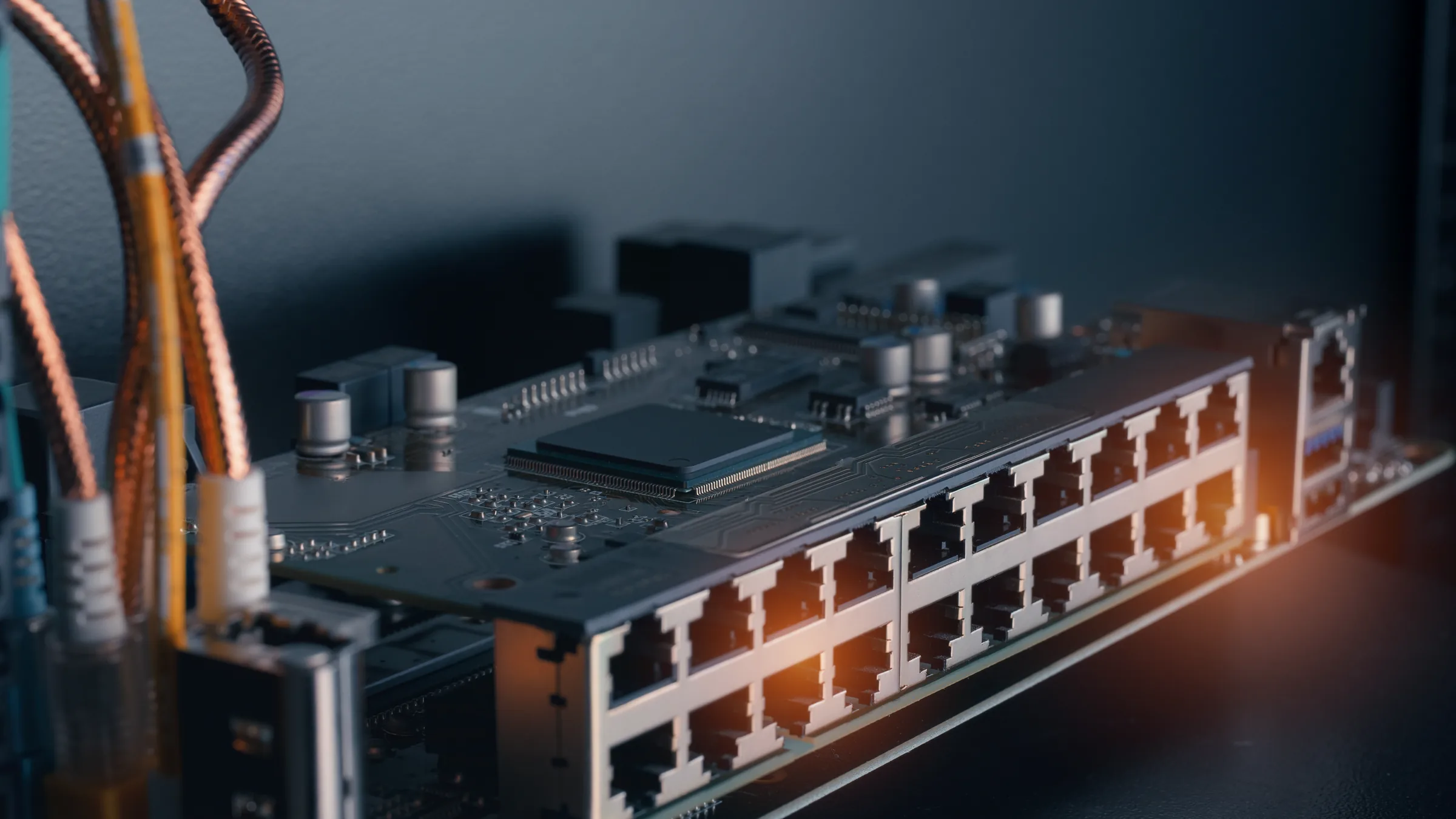
Threat detection at line rate on network silicon, without decrypting traffic — built on the processor software our engineers brought to market across Linux and real-time operating systems.
Executive summary
OEMs needed new network silicon without losing their installed base.
Multi-OS board support and production releases with backward compatibility.
Encrypted-traffic classification, graph-based attack detection and an LLM threat analyst.
Confident silicon adoption, and network products that detect threats at line rate.
System architecture
- L001
Network processor
- L102
Ethernet & serial
- L103
BSP / drivers
- L104
Embedded OS
- L305
On-chip traffic models
- L306
Graph threat detection
- L407
Threat analyst console
The challenge
A family of embedded network processors was moving to a new silicon generation. OEMs needed predictable operating-system and board-support releases for the new parts — without losing compatibility with the products they had already shipped.
The foundation we built
Our engineers ran the software release program for the processor family: board-support packages for embedded Linux and commercial real-time operating systems, new-silicon feature enablement, Ethernet and high-speed serial fixes, regression testing, and coordinated releases with external operating-system vendors.
The AI layer
Ingot brings AI onto this class of silicon. Compact models running on the network processor classify encrypted traffic from flow and timing features, without decryption. Graph neural networks model device-to-device communication to expose lateral movement. An LLM threat analyst explains each alert in plain language and recommends a response, with the operator deciding what changes on the network.
What the customer gains
OEMs adopt new silicon with confidence, and their network products gain line-rate threat detection that preserves encryption and privacy — with faster, clearer triage for security teams.
Foundation delivered
- Multi-OS production software releases
- New-silicon enablement with backward compatibility
- OEM and OS-vendor coordination
AI Ingot delivers on it
- Encrypted-traffic classification on the processor
- Graph-based lateral-movement detection
- LLM threat analyst with operator approval
Who did the work
Built by Ingot's founding engineers at a global semiconductor company.

Discuss a comparable edge AI program.
We will scope it around your systems, data and constraints — starting from this architecture or from a blank page.