Predictive Maintenance Sensor Node for Rotating Equipment
On-device machine learning that recognizes bearing, motor or pump degradation and turns it into a planned repair.
Executive summary
Unplanned failures of rotating equipment stop production.
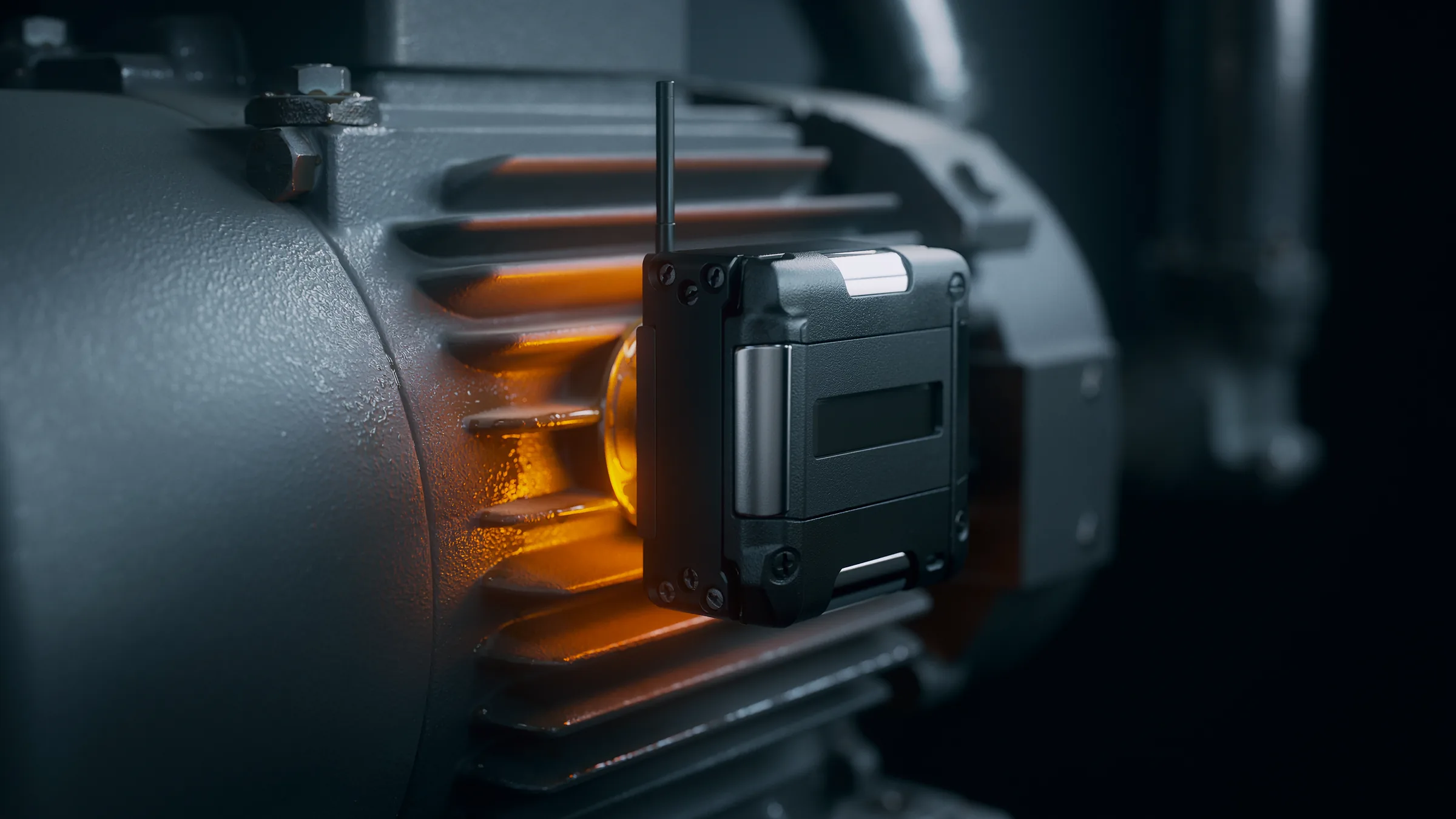
A compact sensor node that recognizes degradation on the device.
TinyML with self-supervised pretraining and remaining-useful-life estimates.
Months of warning, planned maintenance and longer equipment life.
System architecture
- L001
Vibration / current / temp
- L102
Synchronized sampling
- L103
MCU / DSP features
- L304
TinyML classifier
- L205
Gateway uplink
- L406
Work-order suggestion
The business problem
Unplanned failures of rotating equipment stop production and cost far more than the repair itself. Maintenance teams want early warning, but continuous connectivity and manual data review are not practical across hundreds of machines.
What Ingot builds
Ingot builds sensor nodes whose on-device ML recognizes the vibration signatures of degradation. TinyML models, pretrained with self-supervised learning on unlabeled vibration data, need few failure examples; remaining-useful-life estimates turn detections into maintenance recommendations rather than raw data.
Under the hood
Accelerometer bandwidth, ADC resolution, anti-aliasing, isolation, enclosure and power source are chosen for the machines being monitored, with microcontroller-DSP and NPU-SoC options compared. Time- and frequency-domain features feed models trained on known operating regimes, with per-machine tuning where it helps. Firmware covers acquisition, calibration, health checks, signed updates and fleet provisioning.
What you gain
Breakdowns become scheduled maintenance, equipment lasts longer, and many assets are monitored without adding data-review work.
How we'd start
A pilot on a small set of critical assets with known history, then tuning across speeds and loads, then a production node design and rollout plan.
What an engagement delivers
- TinyML model and evaluation protocol
- Maintenance workflow interface
- Embedded acquisition pipeline
- Gateway integration design
- Sensor-node BOM
What this blueprint builds on
Builds on the embedded control, DSP and platform-health engineering in studies 01 and 03.
Discuss a comparable edge AI program.
We will scope it around your systems, data and constraints — starting from this architecture or from a blank page.